
Introduction
Walk into any gym, and whey protein is everywhere. It sits in shaker bottles, post-workout routines, sports nutrition shelves, and athlete meal plans. For some people, it feels like a shortcut to muscle. For others, it feels like an overhyped powder. The truth is simpler and more interesting: whey protein is not magic, but it is one of the most practical and well-studied ways to help the body meet its protein needs when food alone is not convenient.
Whey protein matters because muscle is not built only inside the gym. Training creates the signal, but nutrition provides the raw material. When a person lifts weights, sprints, trains hard, or recovers from sport, muscle proteins are constantly being broken down and rebuilt. Whey helps by providing high-quality amino acids, especially leucine, which is one of the key amino acids involved in switching on muscle protein synthesis, the process by which the body repairs and builds muscle tissue.
The Milk Protein Behind the Gym Scoop
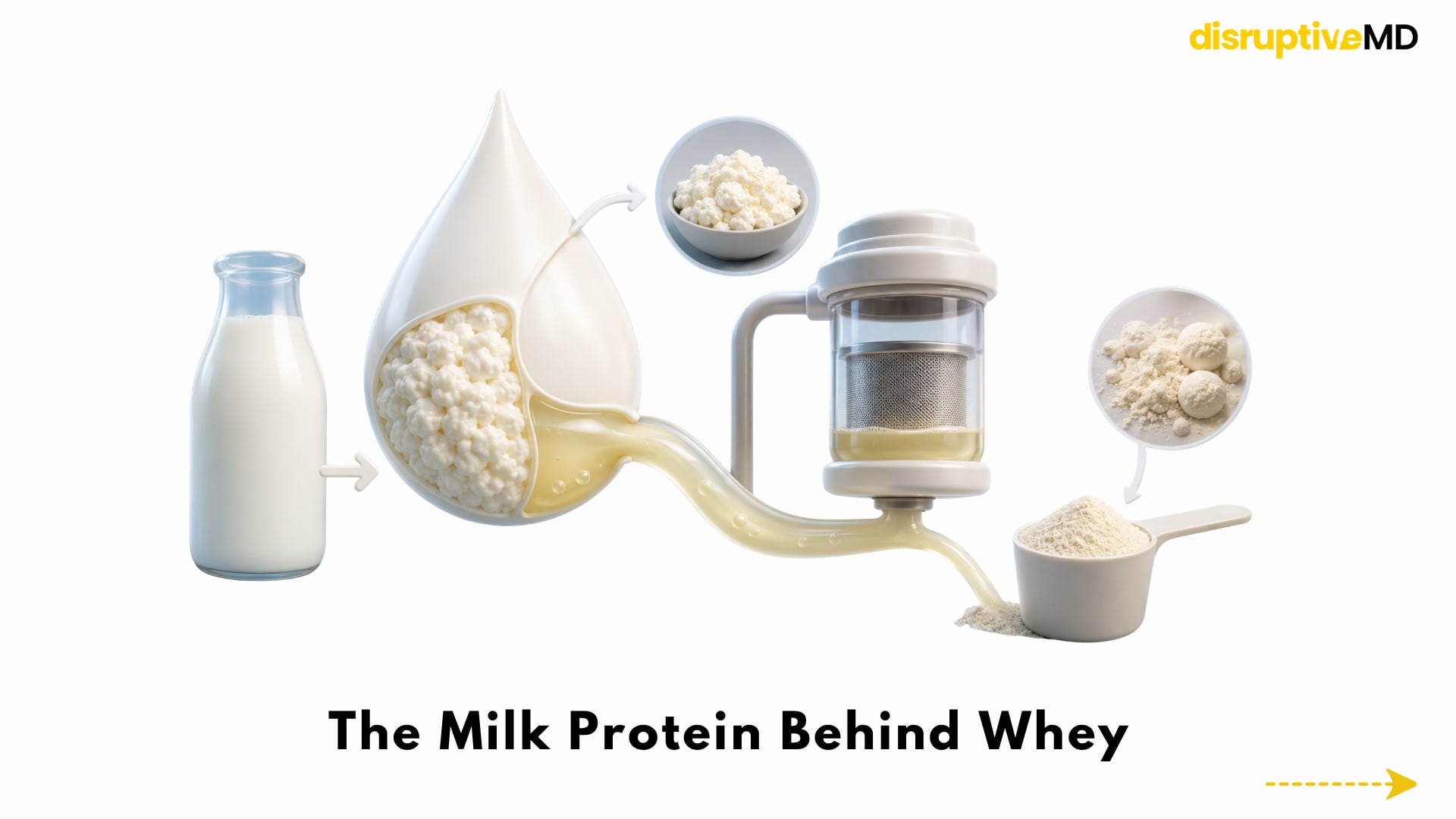
Whey is a protein found naturally in milk. Milk contains two major protein groups: casein and whey. Casein forms the thicker curd during cheese-making, while whey remains in the watery liquid portion. That liquid was once treated as a by-product of dairy processing, but sports nutrition changed its story. Modern filtration technology allows manufacturers to concentrate the useful whey proteins and turn them into powders used in shakes, bars, medical nutrition formulas, and high-protein foods.
This is why whey protein is not a steroid, hormone, drug, or synthetic muscle builder. It is a dairy-derived protein ingredient. What makes it valuable is its amino acid profile. Whey is considered a complete protein, meaning it contains all essential amino acids, which are amino acids the body cannot make on its own and must get from food. For athletes and gym-goers, this makes whey useful because it gives a concentrated protein dose in a fast, convenient form.
From Milk to Powder: How Whey Is Made
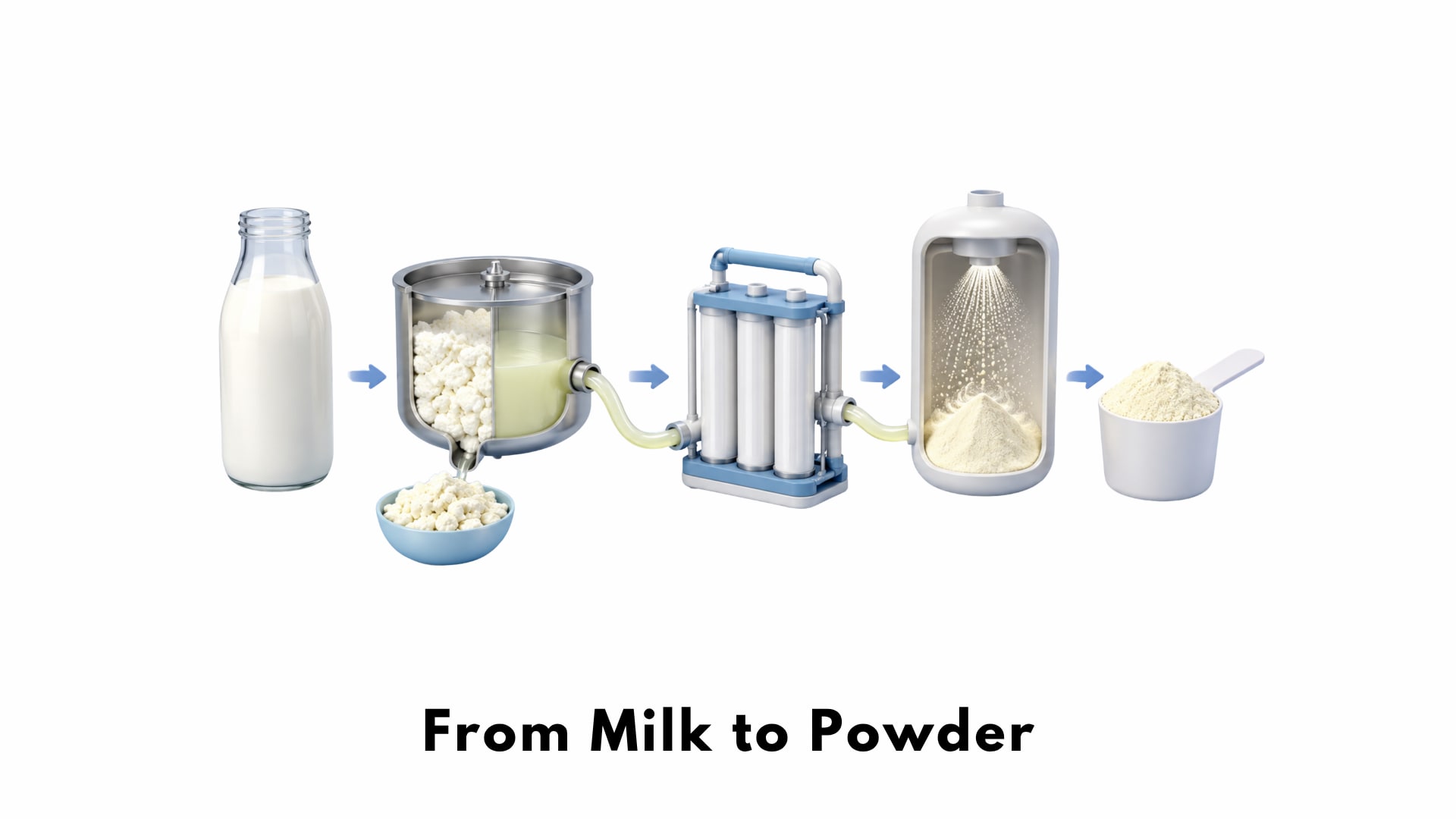
The journey usually begins with cow’s milk. During cheese-making, enzymes or acids help separate milk into solid curds and liquid whey. The liquid whey contains water, lactose, minerals, fats, and whey proteins. It is then filtered to remove varying amounts of lactose, fat, and non-protein components. The more filtration used, the more concentrated the protein becomes.
The filtered liquid is then dried into powder, often through spray drying, a food-processing method that turns liquid into a fine powder using controlled heat and airflow. Depending on the degree of filtration and processing, the final product becomes whey concentrate, whey isolate, or whey hydrolysate. This is why all whey types come from the same basic source but behave slightly differently in nutrition, digestion, cost, and suitability.







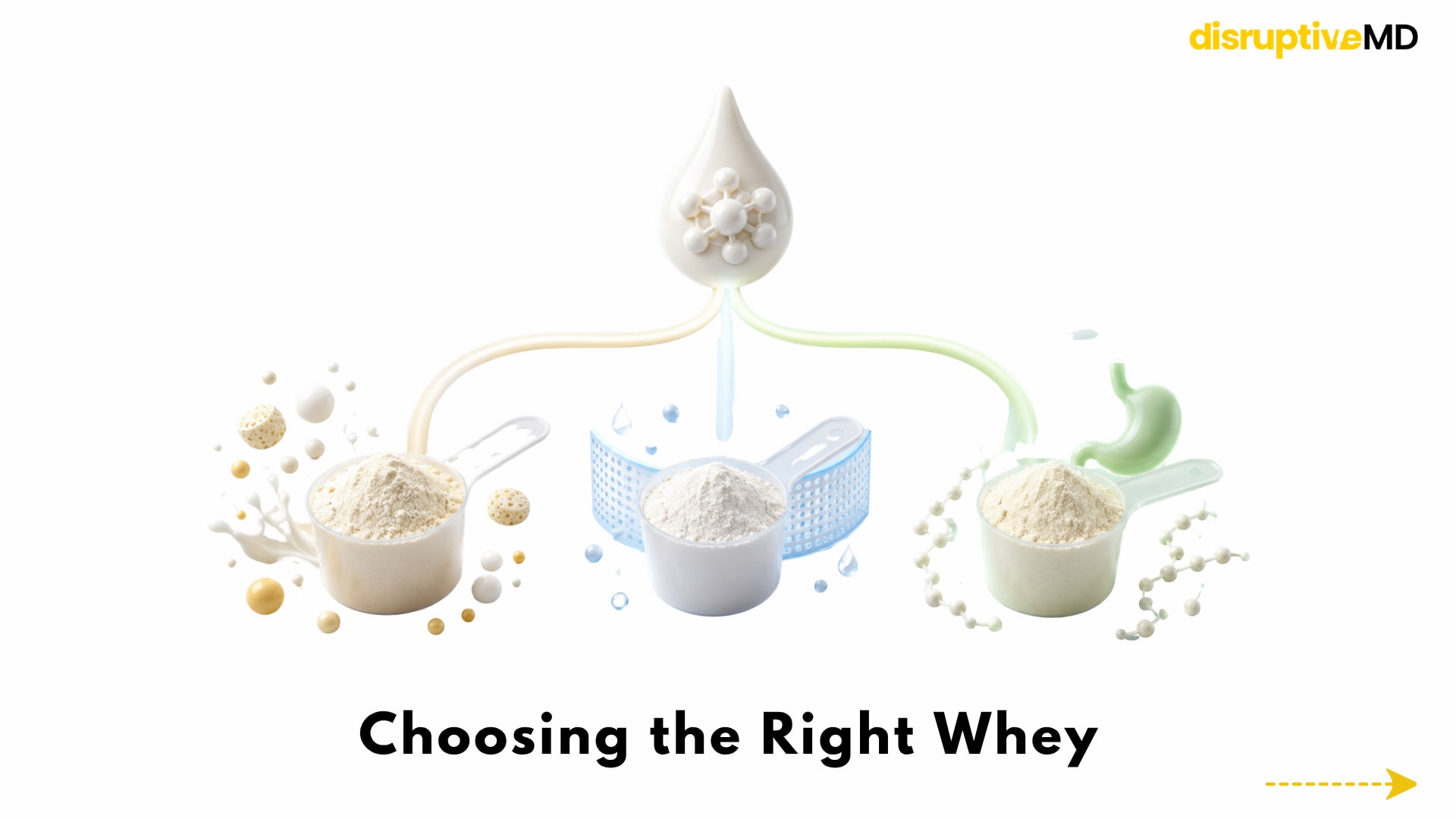

- Whey protein is not magic, a steroid, or a shortcut to muscle.
- It is a convenient way to help meet daily protein needs when food is not practical.
- Training creates the muscle-building signal, but nutrition provides the raw material for repair.
What Whey Does After You Drink It
After whey protein is consumed, the digestive system breaks it into amino acids and small peptides, which are short chains of amino acids. These are absorbed into the bloodstream and delivered to tissues, including skeletal muscle. When combined with resistance training, enough total calories, sleep, and recovery, these amino acids help the body repair damaged muscle fibers and support adaptation to training.
The important point is that whey does not build muscle by itself. It supports the process when the training signal already exists. A person who takes whey but does not train properly, eat enough total nutrients, or recover well should not expect major body-composition changes. Whey is best understood as a tool for meeting protein targets, not as a replacement for disciplined training or whole-food nutrition.
The Three Main Types of Whey Protein
1. Whey Protein Concentrate: The Everyday Option
Whey protein concentrate is the most common and usually the most affordable form. It is filtered enough to increase protein content, but it keeps more lactose, fat, minerals, and natural dairy components than isolate. Many gym-goers choose whey concentrate because it works well for general muscle gain, recovery, and daily protein support.
For most healthy people who tolerate milk well, concentrate is often enough. It is not automatically inferior just because it is less processed. Its main limitation is digestion. Because it contains more lactose than isolate, people with lactose intolerance may experience bloating, gas, abdominal discomfort, or loose stools after using it.
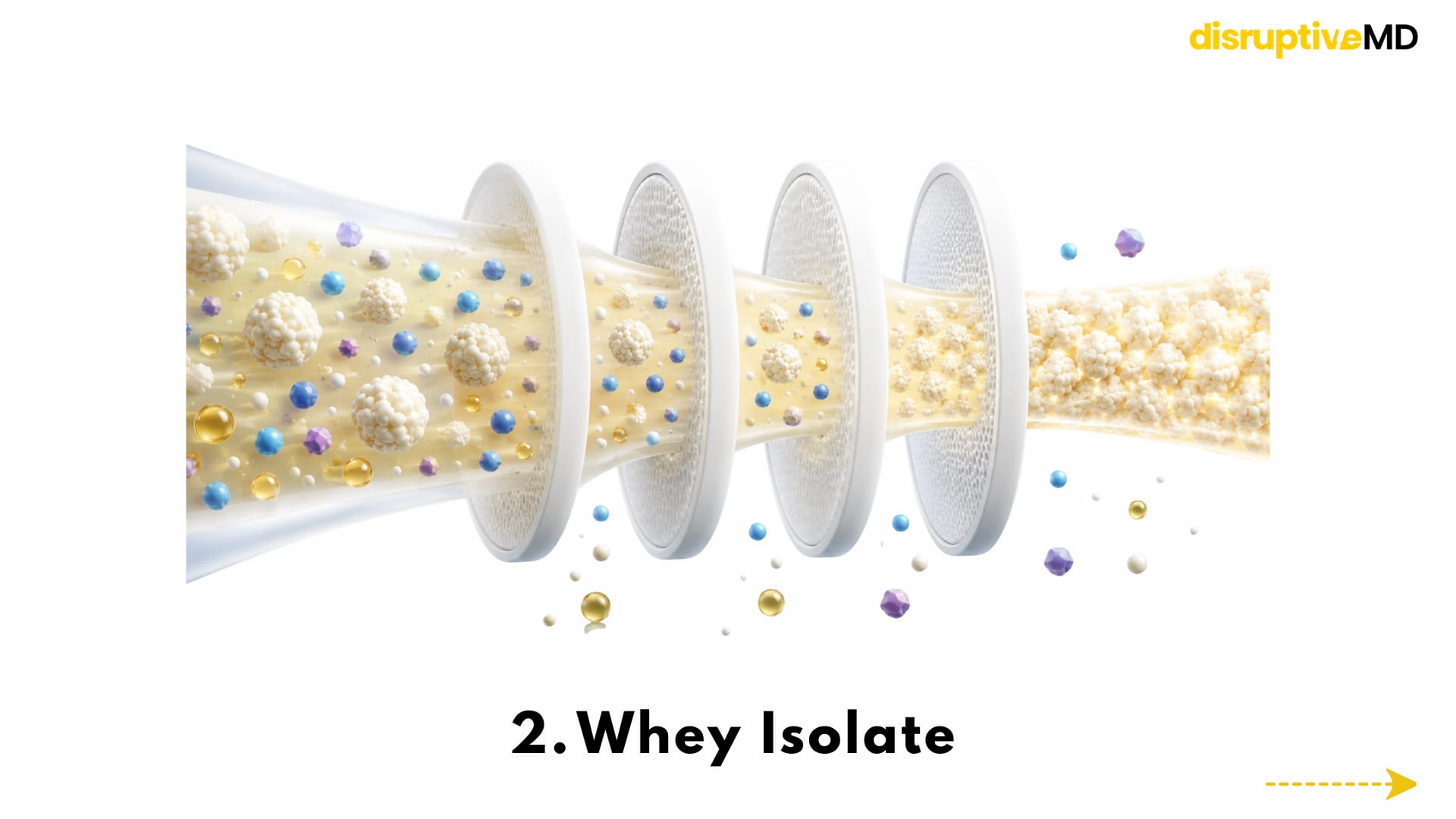
2. Whey Protein Isolate: The Leaner, More Filtered Option
Whey protein isolate goes through additional filtration to remove more lactose, fat, and carbohydrates. This usually gives it a higher protein percentage per scoop. It is often preferred by people who want more protein with fewer extra calories, those on strict body-composition plans, or those who are mildly lactose-sensitive.
For athletes cutting weight, physique competitors, or people who want a cleaner protein-to-calorie ratio, isolate can be useful. However, it is usually more expensive. It is also not automatically better for muscle gain if total protein intake is the same. In simple terms, isolate is a more refined option, not a guaranteed superior result.
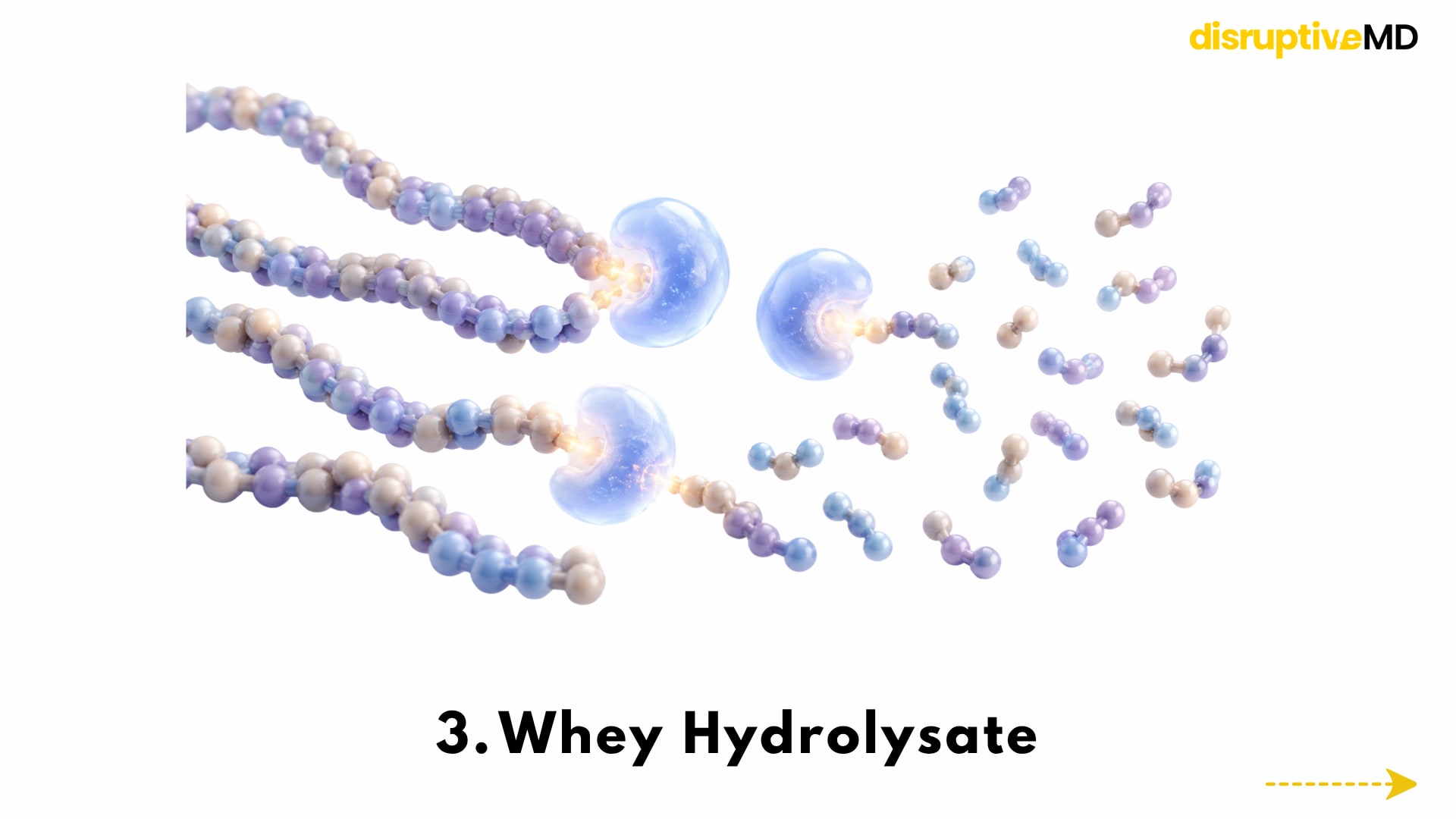
3. Whey Protein Hydrolysate: The Pre-Digested Option
Whey protein hydrolysate is treated with enzymes that partially break the protein into smaller peptides. This is why it is sometimes described as “pre-digested.” It may be easier to digest for some people and is used in certain medical or specialized nutrition settings. Some athletes use it because it is marketed as fast-absorbing but faster does not always mean meaningfully better for every gym-goer.
Hydrolysate is usually the most expensive type and can taste more bitter because of the breakdown process. For most healthy recreational lifters, it is not necessary. It may be useful for people with specific digestion needs or those using it under professional sports nutrition guidance.
Clear Whey, Blends, and Mass Gainers: Do They Count?
Clear whey is usually made from whey isolate and processed to mix more like a juice than a creamy shake. It is not a totally new protein category; it is more of a different format. It may suit people who dislike milky shakes or want a lighter drink after training.
Whey blends combine concentrate, isolate, and sometimes hydrolysate. They can be practical, but the label should be checked carefully because the front name may sound premium while the formula may be mostly concentrate. Mass gainers are different. They often include whey, but they also contain large amounts of carbohydrates and calories. They are not simply “stronger whey.” They are calorie-dense weight-gain products and should only be used when the goal is to increase total calorie intake.
Benefits: Where Whey Actually Helps
The strongest benefit of whey is convenience. Many athletes and gym-goers already know what they should eat but struggle to hit protein targets during busy schedules. Whey makes protein portable, fast, and measurable. This is useful after training, between meals, during travel, or when appetite is low.
Whey can support muscle recovery because it provides amino acids needed for repair. It may help muscle growth when combined with progressive resistance training, enough calories, and consistent protein intake across the day. It may also help preserve lean mass during fat loss because higher protein intake can support satiety and reduce muscle loss when calories are restricted.
Whey is not primarily a performance stimulant. It does not directly increase focus, power, testosterone, or endurance like a drug. Its role is nutritional. It helps fill a protein gap. If the diet already provides enough high-quality protein, extra whey may not add much benefit.
Side Effects and Risks: The Part Gym Marketing Often Ignores
The most common side effects are digestive. Bloating, gas, cramps, nausea, and diarrhea can happen, especially with whey concentrate or products containing lactose, sugar alcohols, gums, or artificial sweeteners. Sometimes the problem is not the whey protein itself but the added ingredients.
People with milk allergy should avoid whey because it is derived from milk proteins. Milk allergy is different from lactose intolerance. Lactose intolerance is difficulty digesting milk sugar, while milk allergy is an immune reaction to milk proteins and can be serious.
People with chronic kidney disease, significant liver disease, or medically restricted protein diets should not start high-protein supplementation without clinical guidance. In healthy people, moderate protein intake is different from uncontrolled high intake, but medical conditions change the risk calculation. More protein is not always better, especially when it replaces fiber-rich foods, fruits, vegetables, carbohydrates needed for training, or balanced meals.
Some users also report acne flare-ups with dairy-based supplements. The relationship is not the same for everyone, but it is worth monitoring in people who notice skin changes after starting whey. Another concern is product quality. Protein powders can vary in purity, accuracy of labeling, and contamination risk. For competitive athletes, this matters because even accidental contamination with banned substances can create anti-doping problems.
What Should You Choose?
For most beginners and regular gym-goers, whey concentrate is a sensible starting point if digestion is good. It is affordable, effective, and usually enough for general muscle building and recovery.
For people who are lactose-sensitive, cutting calories, preparing for a physique goal, or wanting a higher protein percentage per scoop, whey isolate is usually the better choice. It gives more protein with fewer extra carbohydrates and fats.
For people with sensitive digestion, specialized nutrition needs, or professional guidance, whey hydrolysate may be considered, but it is not necessary for most people. Its higher price does not automatically mean better results.
For competitive athletes, the priority is not only the type of whey but product safety. The best choice is a simple formula with transparent labeling and independent sport-focused third-party testing. Athletes should avoid products with hidden blends, aggressive muscle-building claims, or multiple stimulant-like ingredients.
For people with milk allergy, whey is not the right choice. A non-dairy protein option may be safer. For people with kidney disease, liver disease, pregnancy, adolescence, eating disorders, or complex medical conditions, the correct choice should be made with a qualified clinician or sports dietitian.
The Smart Scoop Rule
The best whey protein is not the one with the loudest label. It is the one that fits the person’s goal, digestion, training schedule, medical background, and budget.
A simple decision works well: choose concentrate if you tolerate dairy and want value; choose isolate if you want lower lactose and a leaner profile; choose hydrolysate only if digestion or professional guidance makes it useful. Avoid choosing based only on “fast absorption,” extreme claims, or influencer marketing.
The body does not care how expensive the scoop looks. It cares about total protein, training quality, recovery, and consistency.
Final Takeaway
Whey protein is best understood as a high-quality, convenient protein supplement made from milk. It can help gym-goers and athletes meet daily protein needs, support recovery, and build or preserve muscle when combined with proper training and nutrition. Its main types, concentrate, isolate, and hydrolysate, differ mostly in filtration, lactose content, digestion, cost, and protein concentration.
For most people, whey is not dangerous when used sensibly, but it is also not essential for everyone. Whole foods should remain the foundation. Whey should fill the gap, not replace the diet.
In the end, the smartest choice is not “the strongest whey.” It is the whey that matches the body, the sport, the stomach, and the goal.
Educational Disclaimer
This article is for educational purposes only and does not provide personal medical, nutrition, or sports-performance advice. People with kidney disease, liver disease, milk allergy, pregnancy, adolescence, eating disorders, chronic illness, or competitive anti-doping requirements should consult a qualified healthcare professional or sports dietitian before using protein supplements.
References
- Jäger R, Kerksick CM, Campbell BI, et al. International Society of Sports Nutrition Position Stand: protein and exercise. J Int Soc Sports Nutr. 2017 Jun 20;14:20. doi: 10.1186/s12970-017-0177-8. PMID: 28642676; PMCID: PMC5477153.
- Kumar P, Sharma N, Ranjan R, et al. Perspective of membrane technology in dairy industry: a review. Asian-Australas J Anim Sci. 2013 Sep;26(9):1347-58. doi: 10.5713/ajas.2013.13082. PMID: 25049918; PMCID: PMC4093403.
- Chen, G.Q., Qu, Y., Gras, S.L. et al. Separation Technologies for Whey Protein Fractionation. Food Eng Rev 15, 438–465 (2023). https://doi.org/10.1007/s12393-022-09330-2.
- Jeewanthi RK, Lee NK, Paik HD. Improved Functional Characteristics of Whey Protein Hydrolysates in Food Industry. Korean J Food Sci Anim Resour. 2015;35(3):350-9. doi: 10.5851/kosfa.2015.35.3.350. Epub 2015 Jun 30. PMID: 26761849; PMCID: PMC4662358.
- U.S. Food and Drug Administration. Questions and Answers on Dietary Supplements. FDA, updated 2024. This supports the safety point that dietary supplements are not approved by the FDA for safety and effectiveness before marketing in the same way as drugs.
- National Kidney Foundation. CKD Diet: How Much Protein Is the Right Amount? This supports the warning that people with chronic kidney disease may need individualized protein limits and should consult a dietitian or clinician.
- Mayo Clinic. Milk Allergy: Symptoms and Causes. This supports the distinction between milk allergy and lactose intolerance, and why people with true milk allergy should avoid whey protein.
- Mayo Clinic. Milk Allergy: Diagnosis and Treatment. This supports the recommendation that people with milk allergy should avoid milk and milk proteins.
- NSF Certified for Sport. Certified for Sport® Certification. This supports the recommendation that competitive athletes choose supplements tested for banned substances and label accuracy.
- U.S. Anti-Doping Agency. Supplement Connect. This supports the athlete-specific warning that supplements may carry contamination or anti-doping risk, and that NSF Certified for Sport is recognized as a risk-reduction option for athletes.